

Project Details
Get a Free Quote
Flowline Installation for a 17-Well Package
A Case Study in Trenching, Tie-Ins, and Backfill Execution
Project Overview
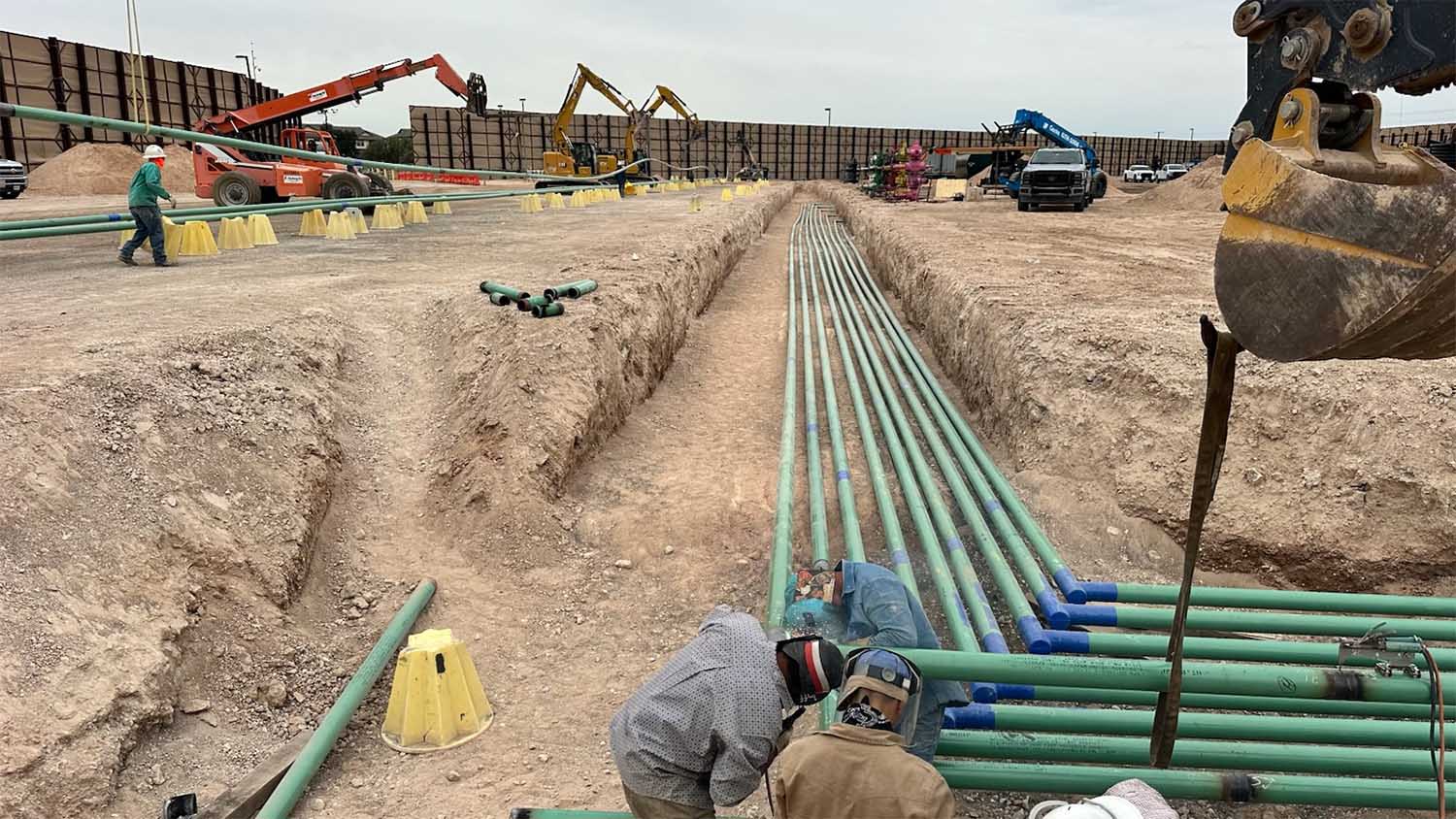
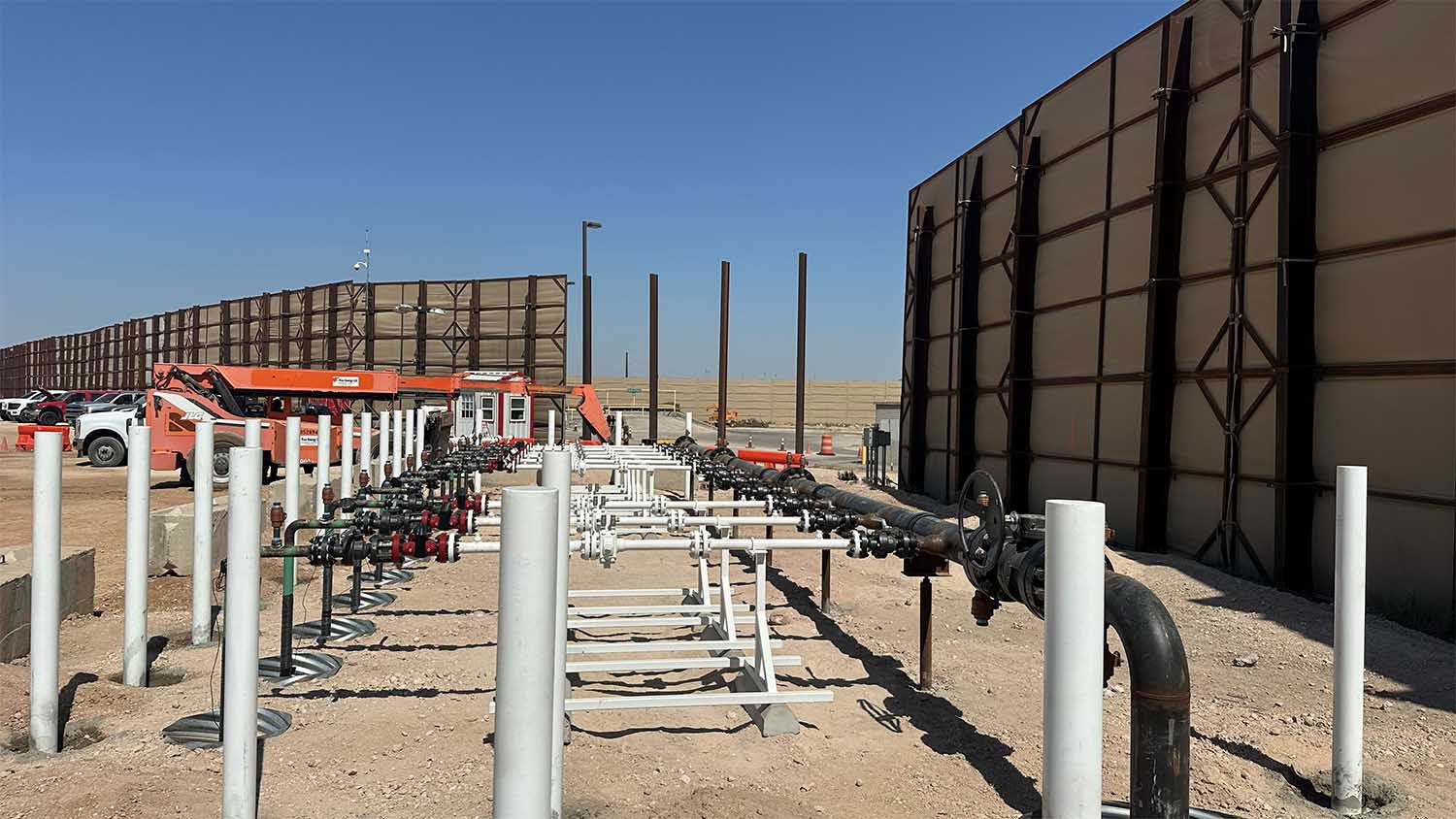
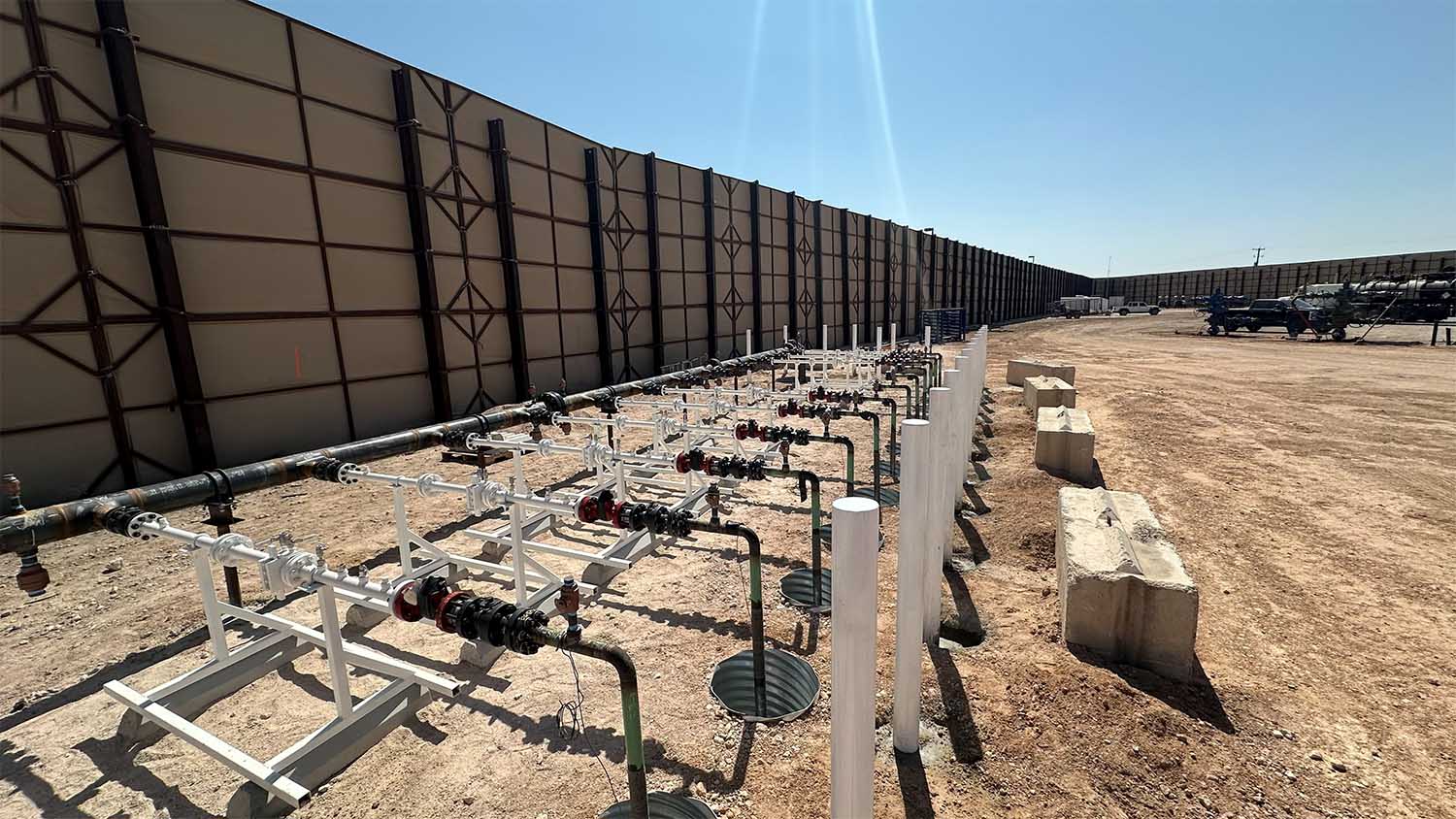
TDi Projects was contracted to design and install the flowline network for a 17-well pad, connecting each wellhead to the central production facility. The scope covered the full installation cycle: trench excavation, pipe stringing and lowering, tie-in fabrication at connection points, and final padding/backfill to protect the line before the trench was closed.
With 17 wells feeding into a shared gathering system, the project demanded tight coordination between excavation crews, pipefitters, and equipment operators to keep the trench line moving without delays to the broader pad construction schedule.
The Challenge
Flowline work on a multi-well pad comes with a few built-in pressure points:
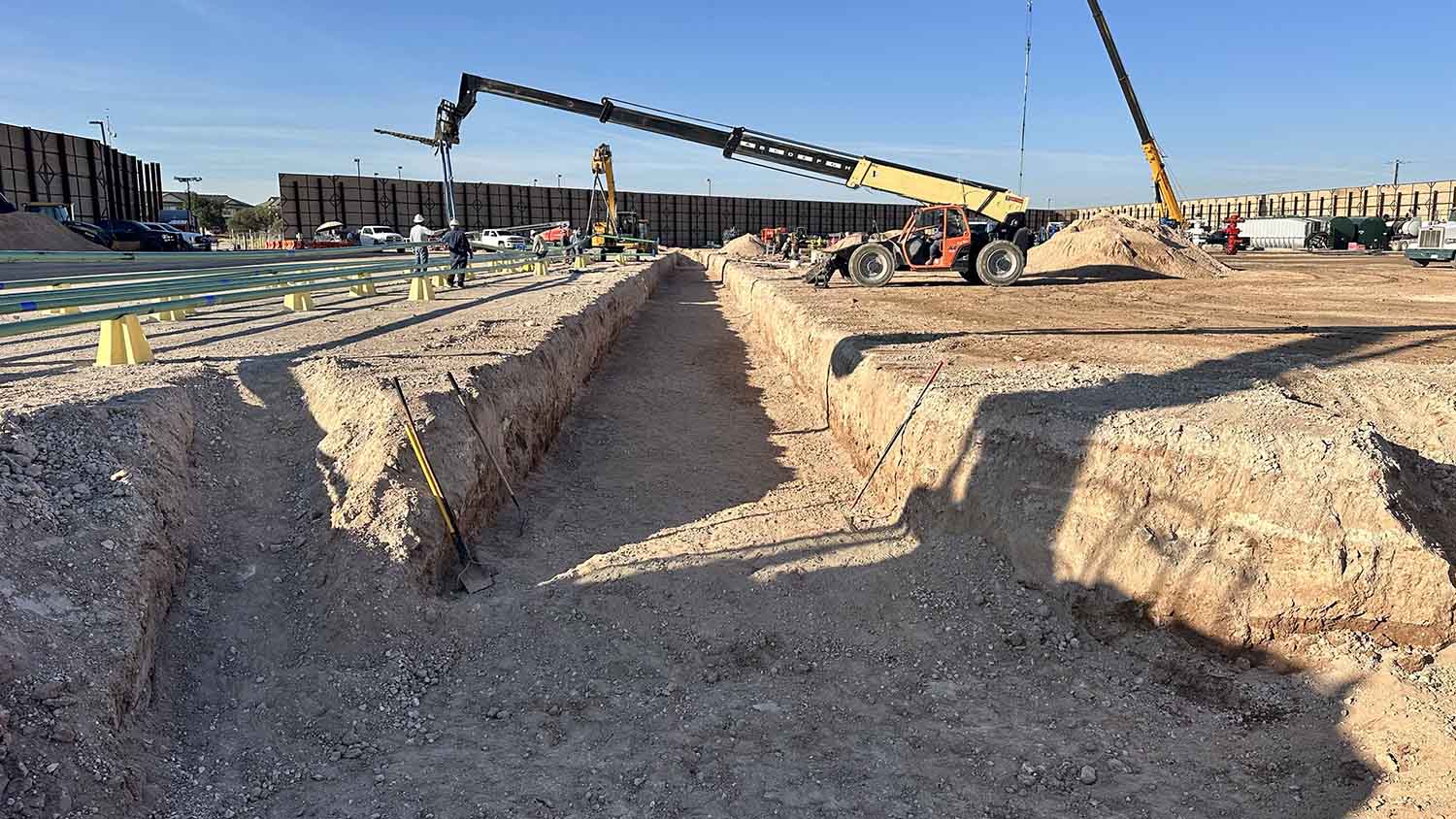
- Long, continuous trench runs across uneven pad ground that must stay open just long enough for pipe placement, without sitting exposed and becoming a safety hazard.
- Multiple tie-in points where individual well lines merge into the header, each requiring precise fitting and pressure-tight connections.
- Backfill integrity — flowline pipe needs a clean, rock-free bed and cover (padding) so it isn’t damaged by native soil, caliche, or debris when the trench is closed.
Our Approach
To keep the trench line moving safely and on schedule, TDi Projects broke the installation into three coordinated phases across every well on the pad.
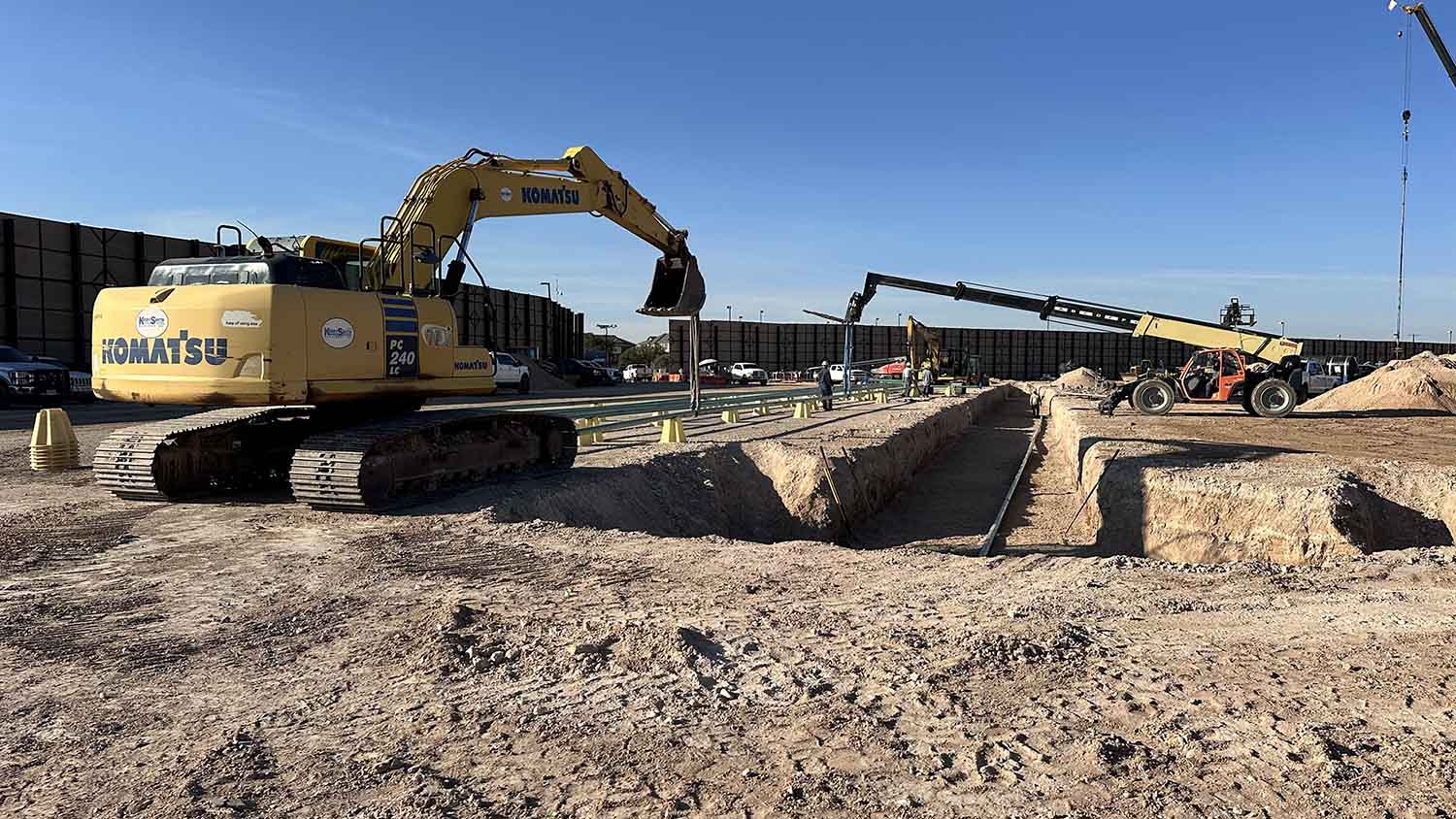
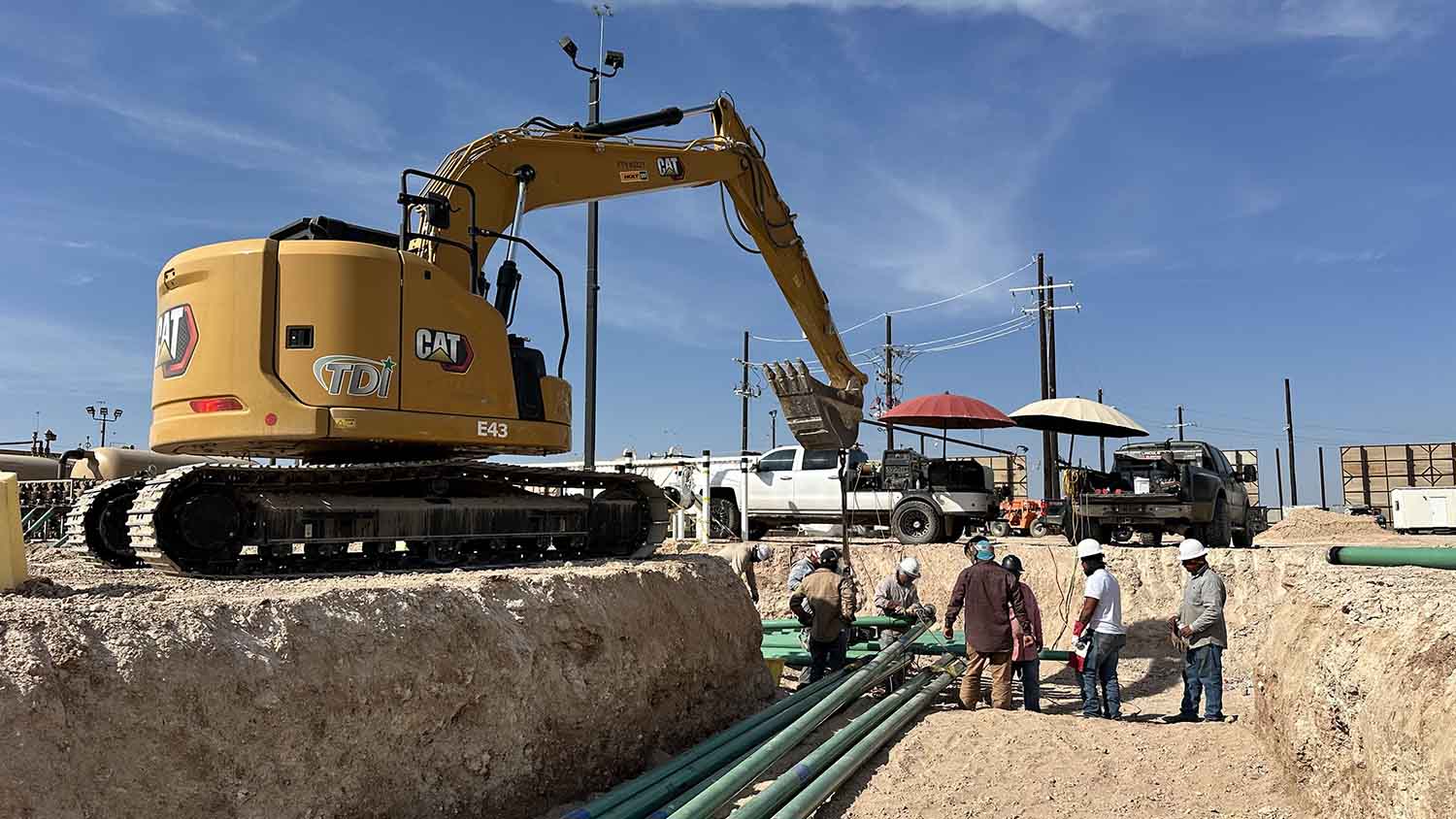
- Trenching and Pipe Lowering – Excavation crews opened the trench line to depth and grade across the pad, immediately followed by lowering-in of the flowline pipe using tracked excavators. Running lowering-in directly behind the trenching crew kept the open trench window as short as possible.
- Tie-In Fabrication – At each connection point, crews fabricated and made up the tie-ins joining individual well flowlines into the shared header system. This step was done in the open trench with pipe crews on the ground, verifying fit, alignment, and joint integrity before backfill.
- Padding and Backfill – Once lines and tie-ins were accepted, a dedicated padding bucket — a screened excavator bucket that separates fine dirt from rock and debris — was used to place clean padding material around and over the pipe. This gives the flowline a protective cushion before the trench is filled back in with native material.
Results
TDi Projects completed the flowline tie-ins and trench backfill across all 17 wells with the trench line kept open only as long as needed for pipe placement and tie-in work, minimizing exposure time and keeping the pad construction schedule on track. Clean padding practices protected the pipeline from rock and debris damage before final backfill.
Why It Matters
A flowline is only as reliable as its installation. Clean trenching, precise tie-ins, and proper padding at the time of install are what keep a gathering system from developing leaks, contamination, or coating damage years down the line. On a 17-well package, that discipline has to be repeated correctly at every single connection point — not just once.
Equipment on Site
The right mix of iron on the ground made it possible to trench, lower-in, and pad the entire pad without a slowdown in the schedule.